

Read Time : 7 mins Approx
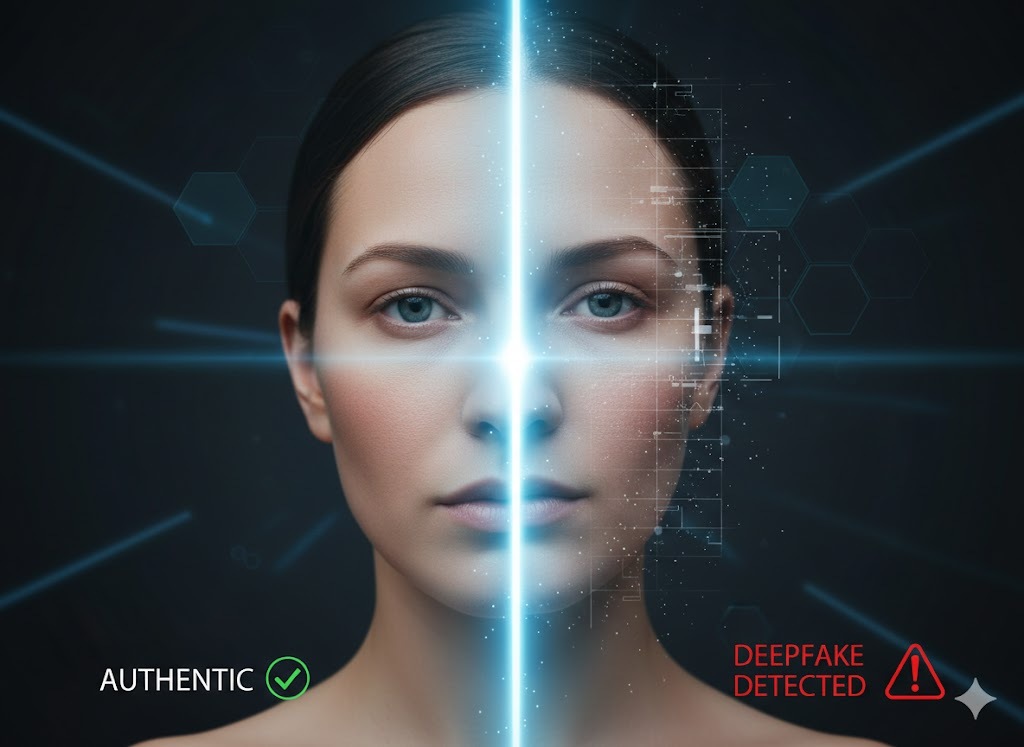
In the first quarter of 2025 alone, deepfake fraud caused over $200 million in financial losses globally. Voice cloning attacks targeting CEOs. AI-generated faces bypassing KYC systems. Synthetic damage claims fooling insurance adjusters.
When these numbers started rolling in, sitting in our small office in Chennai with my co-founder Vinoth, we both realized we weren't building a research project. We were building critical infrastructure for a world that desperately needed it.
Deepfake technology evolves every single day. New tools like DeepFaceLab, Wav2Lip, and Stable Diffusion get released as open source. Fraudsters iterate faster than researchers publish papers. Traditional AI models - trained once and deployed - are snapshots frozen in time. They can't keep up.
We built three parallel teams that work continuously:
This is exactly how antivirus companies have operated for decades. The threat evolves, so the defense must evolve too. While most deepfake detectors degrade rapidly as new AI models emerge, our accuracy has improved over time: 92% detection accuracy for face swaps and 94% for AI-generated IDs.
Six months into a pilot with a major insurance company, we got feedback that changed everything: "Your model says 0.87 probability of being fake. What do we do with that?"
We rebuilt our entire output system around explainability. For face swaps, we highlight the specific regions that triggered detection - the subtle inconsistencies around the jawline, the frequency artifacts in the eye region. For AI-generated images, we show attention maps displaying exactly where synthesis patterns appear.
Now when an insurance adjuster sees our output, they see a highlighted section of the image with a clear explanation: "Spectral artifacts detected in damaged area consistent with AI image synthesis." The conversation shifts from "trust the AI" to "here's the evidence, you decide."
Humans can detect high-quality deepfakes only 24.5% of the time.
A bank processing 10,000 KYC verifications per day. A dating app moderating 50,000 profile uploads. An insurance company reviewing 1,000 claims. Even with the best-trained reviewers, you're relying on a 24.5% detection rate. As volume increases, fraud protection actively degrades because human attention can't scale linearly.
One e-KYC provider in our pilot had hired 50 additional reviewers to handle fraud. Their fraud cases kept increasing because the reviewers were overwhelmed. With Authenta integrated into their workflow, they flag suspicious cases in 5 seconds instead of 2 minutes, at constant accuracy regardless of volume.
We're not replacing humans. We're giving them superhuman capabilities.
Dating apps: 77% of Indians have seen AI-generated images on dating profiles. Trust is the entire foundation of dating platforms.
HR Tech: 17% of hiring managers reported suspected deepfake interviews by the end of 2024. Gartner predicts 1 in 4 job candidates will be fake by 2028.
Law enforcement: Forensic teams struggle with AI-manipulated evidence in criminal cases. How do you prosecute someone when video evidence can be synthesized?
Each industry taught us something different. Dating taught us about moderation at scale. HR Tech taught us about real-time detection during video calls. Law enforcement taught us about explainability under cross-examination.
Most deepfake detectors work in the spatial domain - they look at pixels the same way humans do. We analyze images in the frequency domain. AI generation leaves fingerprints that are invisible to human eyes but visible in the frequency spectrum.
This approach is generator-agnostic. Whether an image comes from Stable Diffusion, MidJourney, or a tool released tomorrow, the fundamental physics of AI generation creates similar spectral artifacts. While competitors chase each new generative model, we detect at the mathematical fundamentals of how these systems work.
The detection-generation arms race: Every detection breakthrough spawns a generation breakthrough. Adversarial training means deepfake creators can specifically target our weaknesses. We can never stop evolving.
The democratization timeline: Five years ago, creating a convincing deepfake required expertise and resources. Today, a 16-year-old can do it with a free app. We need detection infrastructure deployed before deepfakes become as easy as Instagram filters.
The verification paradox: As deepfakes improve, people will demand verification. If verification becomes ubiquitous, it changes human behavior. Do we want to live in a world where every video requires a cryptographic signature to be trusted? We're not just building technology - we're shaping the norms of digital trust.
We have ongoing pilots with PayMedia, YouVerify, idNow, Royal Sundaram, and Axis. We've raised a 7 lakh rupee grant from MeitY's Genesis program. We're now raising 50 lakhs to scale.
The metric that matters most to me isn't revenue or accuracy. It's this: how many fraudulent transactions did we prevent that would otherwise have succeeded?
In our pilots, we're seeing patterns emerge. Synthetic identities that would have sailed through manual review. AI-generated claims that looked perfectly legitimate to trained adjusters. The same fraud attempts appearing across multiple platforms, showing this isn't isolated incidents - it's organized.
Each detection represents trust preserved. Each flagged fake is a potential fraud chain stopped before it starts.
Deepfakes are projected to cost $40 billion in fraud by 2027. What if detection infrastructure enables $40 billion in prevented fraud instead? What if organizations can innovate faster because they have reliable verification?
We believe you can have powerful AI and digital trust. Synthetic media and authentic human connection. Innovation and security. You just need the right infrastructure.
If you're working in e-KYC, insurance, content moderation, or any industry where digital trust matters, I'd love to talk. We're always learning from new use cases and challenges.
Reach out: praveenbenedict@authenta.ai
Sources & References
Forensic-grade deepfake detection powered by adaptive AI.Protecting businesses and communities from manipulated media in real-time.